Hyperbolic Discounting vs Endowment Effect: Time vs Owning

By Tapabrata Biswas · Updated July 23, 2026 · 13 min read
Researched with AI assistance, reviewed and edited by Tapabrata Biswas.

Two biases sit behind a lot of ordinary money mistakes, and the cleanest way to hold them apart is a single word each. One is about time. The other is about ownership.
Hyperbolic discounting warps how you value the future, which is why you under-save. The endowment effect warps how you value what you hold, which is why you over-keep. Every explainer we found teaches one or the other in isolation. None puts them side by side, and none states the one-line contrast that makes both click. So this page does, and then it adds the piece the academic write-ups leave out entirely: what each looks like in Indian money, including a study of 1.5 million investors that measured one of them directly.
What is hyperbolic discounting?
Hyperbolic discounting is the tendency to value an immediate reward far more heavily than a larger delayed one, in a way that reverses once both rewards move into the future. The reversal is the whole point, and it is easy to feel.
Offered ₹1,000 today or ₹1,100 next week, most people take the ₹1,000. Offered ₹1,000 in 52 weeks or ₹1,100 in 53 weeks, the same people wait the extra week for the ₹1,100. The wait is one week in both cases. The only thing that changed is whether the present was on the table, and that alone flipped the choice. A consistent, rational discounter would treat the two the same. People do not.
Economist David Laibson gave this its formal model in his 1997 paper, Golden Eggs and Hyperbolic Discounting, in the Quarterly Journal of Economics. It is worth naming him, because most explainers trace the idea to earlier work by George Ainslie and Richard Thaler and stop there, missing the paper that turned present bias into a finance concept about savings and illiquid assets. The everyday name for the same thing is present bias, and it is why any trade of a small cost now for a larger payoff later, saving, exercise, a deadline, feels harder than the arithmetic says it should.
What is the endowment effect?
The endowment effect is the tendency to value something more once you own it than you would pay to acquire the identical thing. Ownership itself, not the object, moves the number.
The demonstration everyone cites is the 1990 experiment by Daniel Kahneman, Jack Knetsch and Richard Thaler, in the Journal of Political Economy. Cornell students were randomly handed coffee mugs and asked the lowest price they would sell for. Students given no mug were asked the most they would pay. Sellers demanded roughly twice what buyers offered, after about five minutes of ownership. Nothing about the mug had changed. Only who held it.
Thaler had actually coined the term endowment effect a decade before the mug study, in a 1980 paper. The effect has since turned up far from the lab: in shares held long after they should be sold, in homes listed above what comparable sales support, and in brand and bank loyalty that outlasts a clearly better alternative. Its engine is loss aversion, because parting with something owned registers as a loss, and losses hurt about twice as much as equivalent gains please. That mechanism is its own subject, and we keep it there rather than re-explaining it here.
How do the two biases differ?
Hyperbolic discounting misvalues across time; the endowment effect misvalues across ownership. Stated as a table, the contrast is the reason to learn them together.
| Hyperbolic discounting | Endowment effect | |
|---|---|---|
| The axis it distorts | Time: now versus later | Ownership: mine versus not mine |
| What it makes you do | Under-save, over-borrow, procrastinate | Over-hold, refuse to sell or switch |
| The tell | "I'll start next month" | "But it's mine, and it's worth more" |
| Shared root | Loss aversion | Loss aversion |
| The counter | A commitment device | A fresh-start question |
They also compound each other, which is where real money leaks. Take an inherited asset that no longer fits: the endowment effect inflates what you think it is worth, and hyperbolic discounting makes "I'll deal with it next year" easier than "I'll deal with it now." Both biases push the same way, toward keeping the thing and deferring the decision, and the result is an asset held for years past its usefulness.
What do they cost in Indian money?
The strongest evidence for the endowment effect anywhere is an Indian study, and no general explainer mentions it. Sumit Anagol, Vimal Balasubramaniam and Tarun Ramadorai examined 1.5 million Indian investors through IPO share lotteries, where the allocation of shares is random, and published the result in the Review of Economic Studies in 2018.
Because the lottery is random, it separates ownership from choice cleanly. If holding were about judgement, winners and losers would end up holding at similar rates. They did not. Lottery winners were significantly more likely to still hold the shares 1 month, 6 months and even 24 months later than losers were to go out and buy the same shares. Random ownership, on its own, made people hold. That is the endowment effect measured in real portfolios rather than in mugs.
You can see the same shape without a study. Family gold and inherited property are routinely kept well past the price at which anyone would choose to buy them, because they are ours. The IPO study is just the version where the numbers are clean.
On the other axis, present bias is measurable in India too. A study in the IIM Ranchi Journal of Management Studies found present bias in a share of surveyed Indians and reported the predictable pattern: present-biased people save less and borrow more. That is the behaviour a SIP is quietly designed to defeat, by moving the money before the monthly temptation to skip it can act.
How do you counter each one?
Present bias yields to a commitment device, and the endowment effect yields to a fresh-start question. The tools are different because the biases are.
For present bias, the counter is to remove the monthly decision. Automation is the plain version: a SIP or a standing instruction that moves money on payday, so saving happens at the one moment you are not choosing. Lock-in instruments go a step further by attaching a cost to reversal, which is what PPF, EPF and NPS do through their withdrawal rules, converting a temptation into a concrete penalty. The evidence that this works is strong: Thaler and Benartzi's Save More Tomorrow, which raises contributions automatically with each pay rise, lifted average savings rates from 3.5% to 13.6% over 40 months, without anyone having to win the willpower argument in any single month.
For the endowment effect, the counter is a question that erases ownership from the valuation: if I did not already own this, would I buy it today at its current price? If the answer is no, the thing is being held by the bias and not the reasoning. That reframing is the same fresh-start logic that defeats the sunk cost fallacy, which is where we keep the full version of the technique.
Neither counter is about willpower, and that is the point. Both replace a decision you would lose in the moment with a structure that decides in advance.
What this post deliberately does not cover
This explains what the two biases are, how they differ, and how each shows up and gets countered in money decisions. It does not tell you what to buy, sell, hold or how to invest, and the mention of any instrument is an example of a commitment mechanism, not a recommendation to open one.
Some neighbouring ideas sit elsewhere on purpose. Loss aversion, the shared root of both biases, has its own explainer. The fresh-start technique in full lives with the sunk cost fallacy. How people treat money differently by its source is mental accounting, and the whole set of biases is mapped in behavioral finance explained.
Two honest limits. The mug experiment's headline figure is the roughly two-to-one ratio, which holds up across retellings; the exact rupee or dollar medians vary by study and are not the load-bearing number. And a bias being real in aggregate does not mean it is driving any particular decision of yours, which is why the fresh-start question is a check to run and never a verdict to assume.
Frequently asked questions
What is the difference between hyperbolic discounting and the endowment effect? They distort value along different axes. Hyperbolic discounting is about time: it makes an immediate reward feel disproportionately larger than a bigger reward later, which is why saving for the future feels so hard. The endowment effect is about ownership: it makes something you already hold feel more valuable than the identical thing you do not hold, which is why you keep assets past the point where you would buy them. One bias explains under-saving, the other explains over-holding. They share a root cause in loss aversion, since both a delayed reward and a sold possession register as a loss.
What is hyperbolic discounting in simple terms? Hyperbolic discounting is the tendency to value immediate rewards far more heavily than delayed ones, in a way that flips depending on whether the present is involved. Offered ₹1,000 today or ₹1,100 in a week, most people take the ₹1,000. Offered ₹1,000 in 52 weeks or ₹1,100 in 53 weeks, the same people wait for the ₹1,100. The one-week wait is identical, valued completely differently. Economist David Laibson modelled this formally in his 1997 paper Golden Eggs and Hyperbolic Discounting in the Quarterly Journal of Economics, and it is the reason any choice that trades a small cost now for a larger benefit later, saving, dieting, exercise, feels structurally hard.
What is the endowment effect, and what was the mug experiment? The endowment effect is the pattern where people value a thing more once they own it than they would to acquire it. The classic demonstration is the 1990 experiment by Kahneman, Knetsch and Thaler, published in the Journal of Political Economy. Cornell students were randomly given coffee mugs, then asked the least they would accept to sell; students without mugs were asked the most they would pay to buy. Sellers demanded roughly twice what buyers offered, after about five minutes of ownership. Richard Thaler had coined the term endowment effect a decade earlier, in a 1980 paper. The effect has since been shown in shares, homes and brand loyalty.
How does the endowment effect show up in India? In a large field study, not only in a lab. Anagol, Balasubramaniam and Ramadorai studied 1.5 million Indian investors through IPO share lotteries, where allocation is random, and found that lottery winners were significantly more likely to still hold those shares 1, 6 and even 24 months later than lottery losers were to buy them. Random ownership, by itself, made people hold. The same pattern appears anecdotally in inherited property and family gold that is kept well past the point where anyone would buy it at today's price, though the IPO study is the cleanest measured evidence because the allocation was genuinely random.
How do you counter present bias when saving? With a commitment device, which pre-commits your future self before present bias gets a vote each month. Automation is the everyday version: a SIP or an auto-debit moves the money on payday so no monthly decision is required. Lock-in instruments go further by attaching a real cost to reversing the decision, which is what PPF, EPF and NPS do through their withdrawal restrictions. Research by Thaler and Benartzi on Save More Tomorrow, where contributions rise automatically with each raise, lifted average savings rates from 3.5% to 13.6% over 40 months, without anyone having to win the willpower fight in any single month.
Sources
-
Laibson, D., Golden Eggs and Hyperbolic Discounting, Quarterly Journal of Economics, 112(2), 443 to 478, 1997 (the formal model of present bias and the illiquid-asset commitment mechanism) ideas.repec.org
-
Kahneman, D., Knetsch, J. and Thaler, R., Experimental Tests of the Endowment Effect and the Coase Theorem, Journal of Political Economy, 98(6), 1990 (the Cornell mug experiment and the roughly two-to-one seller-to-buyer valuation) en.wikipedia.org
-
Anagol, S., Balasubramaniam, V. and Ramadorai, T., Endowment Effects in the Field: Evidence from India's IPO Lotteries, Review of Economic Studies, 85(4), 1971 to 2004, 2018 (the 1.5 million Indian investors and the holding pattern among lottery winners) ideas.repec.org
-
Present bias and its influence on financial behaviours amongst Indians, IIM Ranchi Journal of Management Studies (present bias linked to lower saving and higher borrowing among Indian respondents) emerald.com
-
Thaler, R. and Benartzi, S., Save More Tomorrow, Journal of Political Economy, 2004 (auto-escalation raising average savings rates from 3.5% to 13.6% over 40 months) journals.uchicago.edu


You might also like
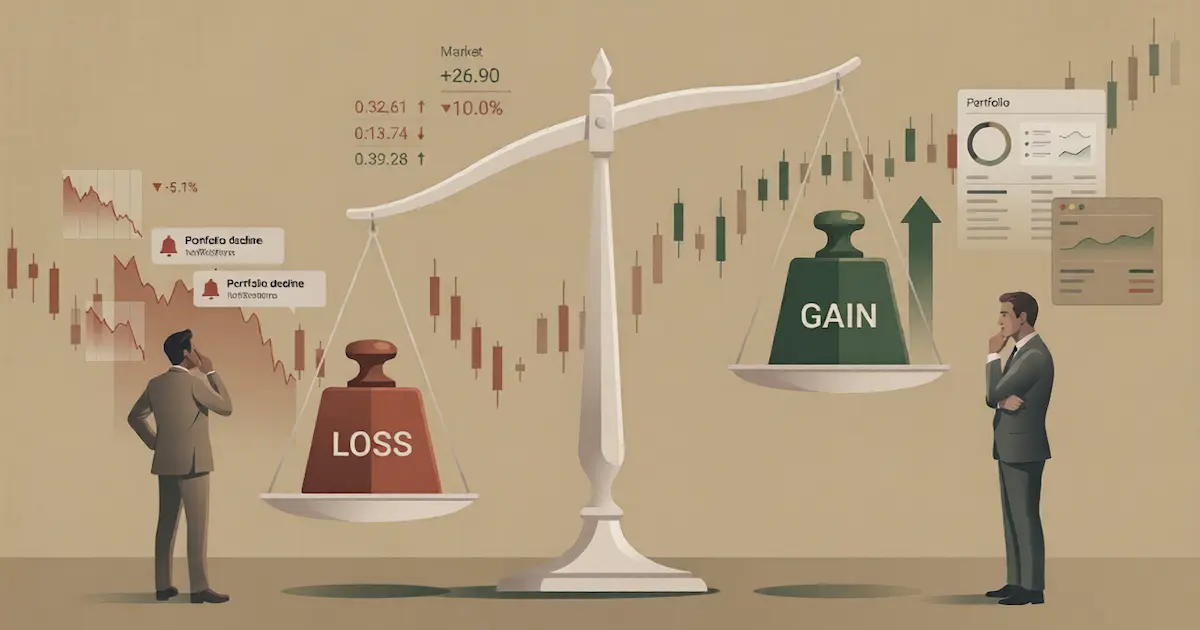
Loss aversion is feeling losses about twice as intensely as equal gains. The 2.25 ratio, examples, loss vs risk aversion, and how it quietly hurts returns.
14 min read
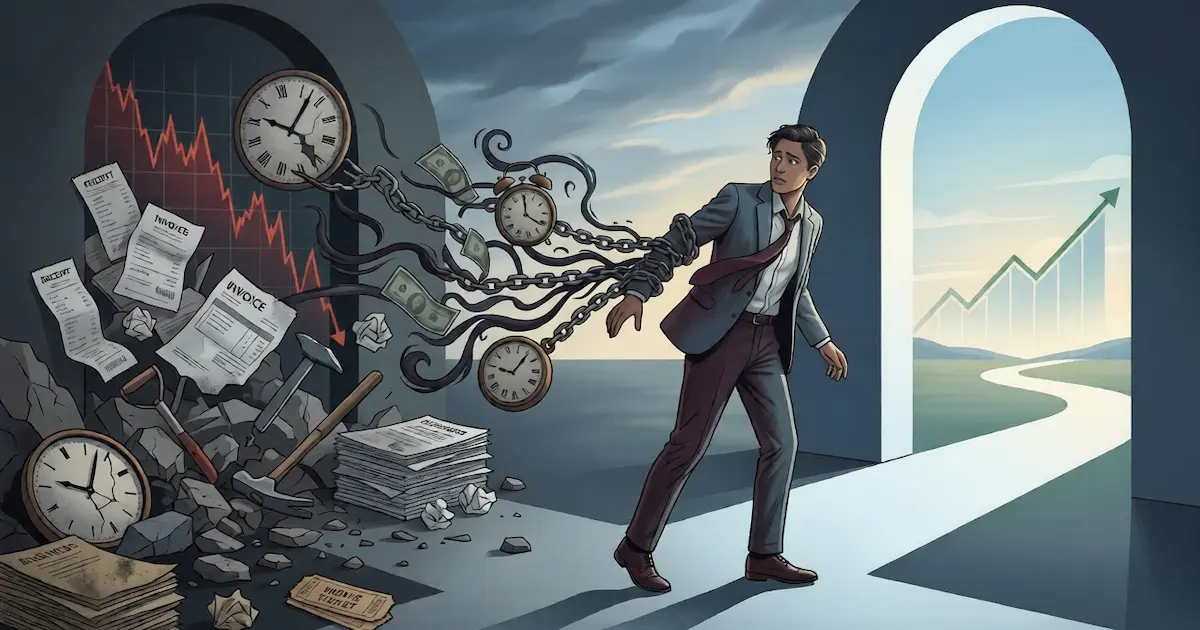
A sunk cost is money already spent and unrecoverable. The fallacy is continuing only because of it, how to avoid it, and why Concorde is the classic case.
13 min read
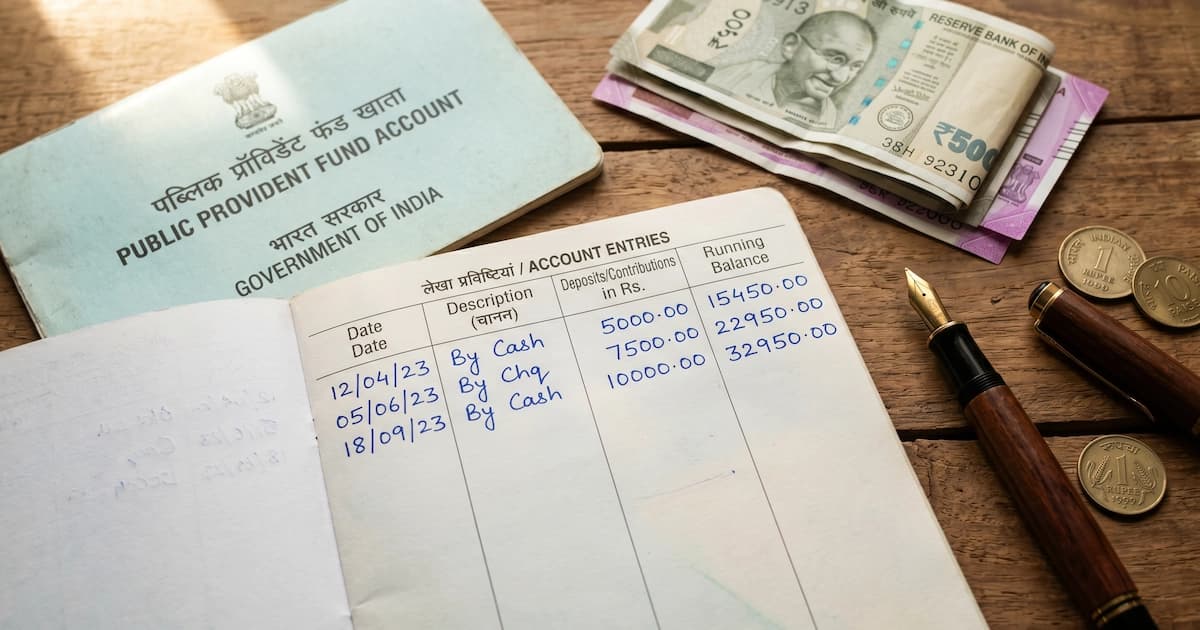
PPF pays 7.1% for Jul-Sep 2026, unchanged since 2020. See the Rs 500 to Rs 1.5 lakh limits, EEE tax, 15-year lock-in, withdrawal rules and a maturity example.
13 min read