Health Insurance Claim Rejected? What the Insurer Must Do

By Tapabrata Biswas · Published August 31, 2026 · 10 min read
Researched with AI assistance, reviewed and edited by Tapabrata Biswas.
Reviewed by Subir Kumar Debsharma, Tax, GST and ROC professional with 20+ years of experience.

Search this and you get lists of reasons your claim was refused. Non-disclosure, waiting period, room-rent limit, day-care exclusion. Those lists are accurate and they are all written from one side of the desk, describing what the insurer may do.
The Insurance Regulatory and Development Authority of India runs the other direction too. Its Master Circular on Health Insurance Business, dated 29 May 2024, sets out what an insurer must do: how fast, with whose approval, in how much detail, and who has to fetch the paperwork. Almost none of that appears on the pages ranking for this question, including the independent ones.
This post works through those obligations, quoting the circular. It is an explainer and not legal advice. A live dispute over your own rejected claim turns on your policy wording and your medical facts, and it belongs with the insurer's grievance officer, the Insurance Ombudsman, or a lawyer.
Why do health insurance claims get rejected?
The common grounds fall into two groups: something about you that the insurer says it did not know, and something about the policy that never covered the treatment.
The first group is non-disclosure and misrepresentation, usually of a pre-existing condition. The second is structural: a waiting period that has not run, a permanent exclusion, a room-rent or disease sub-limit, a day-care procedure outside the listed schedule, or an admission the insurer says was for investigation and not treatment.
That much is well covered elsewhere. The rest of this post is about the constraints the regulator puts on the refusal itself, because those decide what you can do about it.
What is the moratorium period, and what does it actually bar?
After 60 months of continuous coverage, an insurer cannot contest your policy or your claim on grounds of non-disclosure or misrepresentation, except for established fraud.
The circular puts it under the heading "Policy/Claim cannot be contested":
No policy and claim of health insurance shall be contestable on any grounds of non-disclosure and/or misrepresentation except for established fraud, after the completion of the Moratorium Period, i.e. 60 months of continuous coverage
Read the boundary carefully, because it is narrower than the way it usually gets summarised. It shuts off non-disclosure and misrepresentation. It does not shut off the policy's permanent exclusions, and it does not shut off proven fraud. Five years of cover does not make every claim payable. It makes one specific line of attack unavailable, and that line happens to be the one behind a large share of contested rejections.
Porting does not restart the clock. The circular attaches a note:
The accrued credits gained under the ported and migrated policies shall be counted for the purpose of calculating the Moratorium period.
The same protection runs through the rest of the circular. Renewing inside the grace period preserves the sum insured, the no-claim bonus, specific waiting periods, the pre-existing disease waiting period and the moratorium period. Migration within an insurer and portability between insurers carry those same credits across. So the five years is a property of your continuous cover, not of your relationship with one company.
Can an insurer reject a claim without explaining why?
No. A repudiation needs committee approval before it happens, and it has to name the clause it relies on.
Two requirements sit next to each other in the circular's section on settlement of claims. The first is the one almost nothing mentions:
No claim shall be repudiated without the approval of PMC or a three-member sub-group of PMC called the Claims Review Committee (CRC).
PMC is the insurer's Product Management Committee. A refusal is not a decision a single claims assessor is permitted to take alone.
The second governs what you are told:
In case, the claim is repudiated or disallowed partially, details shall be conveyed to the claimant along with full details giving reference to the specific terms and conditions of the policy document.
A rejection that gives a reason in general terms and names no clause does not meet that. Several pages advise readers to ask for the rejection in writing with the specific clause identified. That advice is sound, but it understates the position: it is the insurer's obligation and not a courtesy you are requesting.
Who has to collect the documents?
The insurer and the third-party administrator do, and the circular says the policyholder is not required to.
Pursuant to intimation of the claim, Insurers and Third Party Administrators (TPAs) shall collect the required documents from the Hospitals. Policyholder shall not be required to submit the documents.
This is the single most reversed rule in published guidance on the subject. A page examined for this post, updated in May 2026 and written by an independent publisher and not an insurer, tells readers to obtain the missing documents from the hospital themselves. That describes what people have always done. It is not what the current circular requires.
The practical difference is not about who walks to the records desk. It is about what a stalled claim means. If a claim is sitting unpaid because a document is missing, the question of whose job it was to fetch it is now answered in the rulebook.
How fast must a cashless claim be approved?
One hour for the initial authorisation, three hours for discharge, and the insurer pays for its own delay.
Insurer shall decide on the request for cashless authorization immediately but not more than one hour of receipt of request.
Insurer shall grant final authorization within three hours of the receipt of discharge authorization request from the hospital. In no case, the policyholder shall be made to wait to be discharged from the Hospital.
And the part with teeth:
If there is any delay beyond three hours, the additional amount if any charged by the hospital shall be borne by the insurer from shareholder's fund.
Shareholders' funds, and not the policyholder fund. The regulator put the cost of a slow discharge on the insurer's own account and not on the pool of premiums.
There is a further provision for the worst case. Where a policyholder dies during treatment, the insurer shall immediately process the claim settlement request and get the mortal remains released from the hospital immediately.
How long is the pre-existing disease waiting period now?
Capped at 36 months, reduced from 48 by the IRDAI (Insurance Products) Regulations, 2024.
This is the figure most often quoted out of date, and the older four-year number is still in circulation. The cap is a ceiling and not a standard: an individual policy may set a shorter pre-existing waiting period, and many do.
Where an insurer revises a product to comply with the new framework, the circular requires that accrued benefits survive the revision. The Product Management Committee has to ensure that benefits such as the waiting period and the moratorium period already credited to a policyholder are protected and carried forward into the new policy. A rewritten product is not permitted to reset what you have already earned.
What this post deliberately does not cover
It does not tell you whether your own claim was correctly rejected. That turns on your policy wording, your medical records and the clause the insurer invoked, none of which a general explainer can see. It does not name insurers, compare policies, rate claim-settlement ratios or suggest what to buy.
It does not walk through the complaint process. The route runs through the insurer's grievance officer, then the Insurance Ombudsman, and possibly a consumer forum, and each has its own limits, timelines and jurisdiction that deserve their own treatment, which a paragraph here cannot give.
It does not cover group or employer policies in any depth, where waiting periods and pre-existing cover often work differently from a retail policy, nor government schemes, which run on their own rules. The two Pradhan Mantri insurance schemes are covered separately in PMJJBY vs PMSBY.
And it does not interpret the fraud exception. What counts as established fraud, as against an honest omission, is exactly the question a contested case turns on, and it is a matter for a professional looking at the facts.
Frequently asked questions
Can a health insurance claim be rejected after 5 years? Not on the ground that trips up most claims. IRDAI's Master Circular on Health Insurance Business states that no policy and no claim shall be contestable on any grounds of non-disclosure or misrepresentation, except for established fraud, after the completion of the moratorium period, which is 60 months of continuous coverage. Read the words carefully, because the protection is specific rather than total. It closes off non-disclosure and misrepresentation. It does not switch off the policy's permanent exclusions, and it does not cover established fraud. A claim can still be declined for a reason that has nothing to do with what you disclosed when you bought the policy.
Does changing insurers restart the moratorium period? No. The Master Circular attaches a note to the moratorium clause stating that the accrued credits gained under ported and migrated policies shall be counted for the purpose of calculating the moratorium period. So five years spread across two insurers still gets you there, provided the cover was continuous and properly ported. The same circular protects those credits in other situations too: renewal during the grace period preserves the sum insured, the no-claim bonus, specific waiting periods, the pre-existing disease waiting period and the moratorium period, and the same credits transfer on migration within an insurer and on portability between insurers.
Does an insurer have to tell me why my claim was rejected? Yes, and in more detail than most rejection letters give. The Master Circular requires that where a claim is repudiated or disallowed in part, the details shall be conveyed to the claimant along with full details giving reference to the specific terms and conditions of the policy document. A rejection that names no clause does not meet that standard. There is a second requirement behind it that almost nothing mentions: no claim shall be repudiated at all without the approval of the Product Management Committee, or of a three-member sub-group of it called the Claims Review Committee. A refusal is not something a single assessor is permitted to decide alone.
Do I have to collect the documents for my claim? No, and this is the most commonly reversed rule in published guidance. The Master Circular states that pursuant to intimation of the claim, insurers and Third Party Administrators shall collect the required documents from the hospitals, and that the policyholder shall not be required to submit the documents. Pages that tell you to chase the discharge summary and the investigation reports yourself are describing the old practice rather than the current rule. Knowing where the obligation sits changes what you are asking for when a claim stalls on missing paperwork.
How quickly must a cashless claim be approved? Within one hour for the initial authorisation. The Master Circular requires the insurer to decide on a request for cashless authorisation immediately, and in no case more than one hour after receiving it. Final authorisation for discharge is due within three hours of the hospital's request, and the circular adds that in no case shall the policyholder be made to wait to be discharged. If discharge is delayed beyond three hours, any additional amount the hospital charges for that delay is borne by the insurer, out of its shareholders' funds rather than yours.
In summary
The lists of rejection reasons are not wrong. They are just one half of the subject, and the half that describes the insurer's freedom rather than its obligations.
A rejected claim is also, in the short term, a cash problem, which is the other reason an emergency fund exists: the hospital wants paying while the dispute runs. Where health cover sits in a wider plan is covered in our guide for beginners.
The other half: sixty months of continuous cover closes off non-disclosure as a ground, and porting carries that clock with you. A refusal needs committee approval and has to cite the clause it rests on. The documents are the insurer's job to collect. Cashless authorisation runs to a one-hour clock and discharge to a three-hour one, with the cost of a slow discharge falling on the insurer's shareholders.
None of that decides an individual case. It does decide what you are entitled to ask for while a case is being decided, which is a different thing and, when a claim is sitting unpaid, a more useful one.
Sources
- Insurance Regulatory and Development Authority of India, Master Circular on Health Insurance Business, 29 May 2024, for the moratorium period at 60 months and the ported-credit note, the Claims Review Committee requirement, the obligation to give full details referencing specific policy terms, the rule that insurers and TPAs collect documents from hospitals, the one-hour cashless and three-hour discharge timelines, and the shareholders'-fund liability for delay: irdai.gov.in
- Insurance Regulatory and Development Authority of India, IRDAI (Insurance Products) Regulations, 2024, for the reduction of the maximum pre-existing disease waiting period from 48 months to 36 months: irdai.gov.in
- Insurance Regulatory and Development Authority of India, Bima Bharosa grievance system and the Insurance Ombudsman, named here only as the route a disputed claim takes and not walked through in this post: irdai.gov.in



You might also like
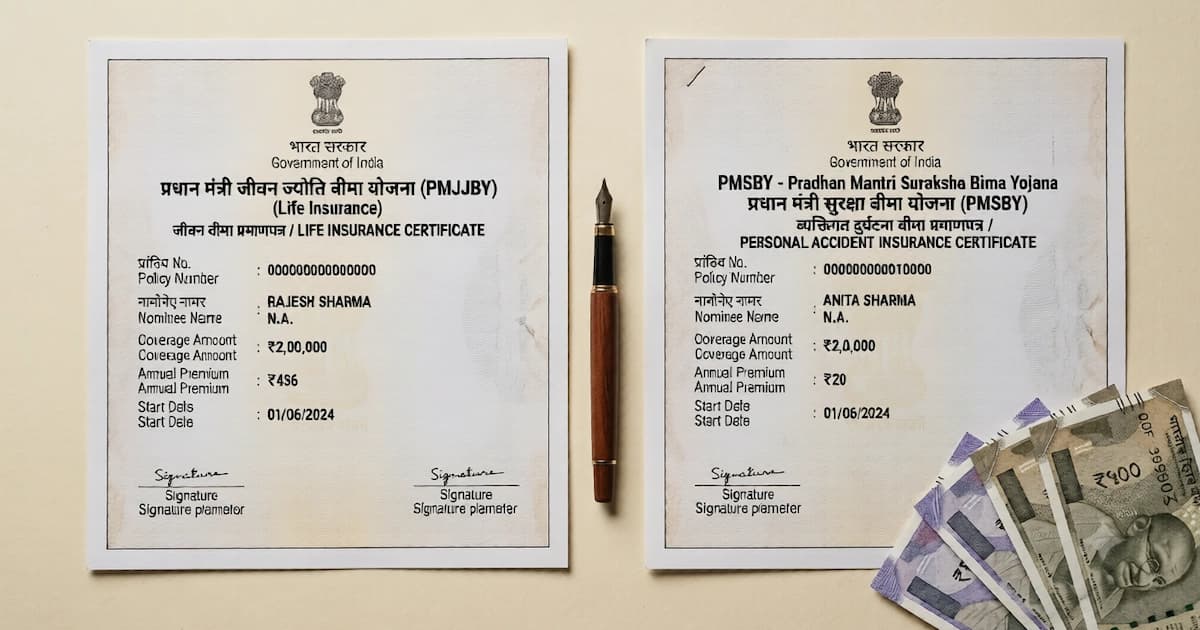
PMJJBY vs PMSBY: Rs 436/yr for Rs 2 lakh life cover vs Rs 20/yr for Rs 2 lakh accident cover. Age limits, the 30-day lien, claims, and holding both for Rs 456.
14 min read

No regulator says three to six months. The RBI says two. Work out your own from essential expenses and how long your income could stop.
11 min read

A beginner's guide to managing money in India and the US, built as an order of operations: what to do first, then next, with worked rupee and dollar examples.
22 min read